By Germaine Samuels, Senior Recruitment Consultant
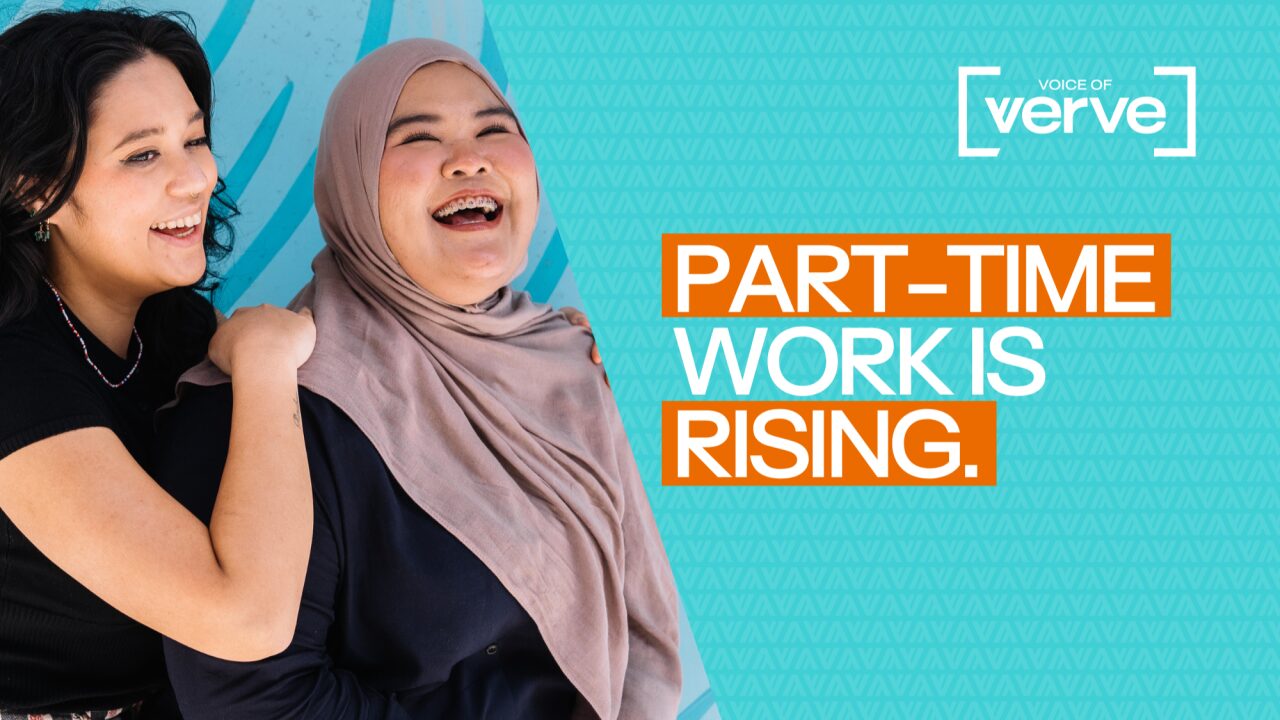
Across Newcastle, the Hunter, and the broader Australian workforce, I’m seeing a trend that feels increasingly difficult to ignore. More candidates are actively seeking part-time work. Not because they can’t find full-time employment. Because they don’t want it.
At a time when cost of living pressures remain high, housing affordability continues to challenge many Australians, and financial security remains front of mind, this shift seems counterintuitive. Logic would suggest people would be chasing more hours.
Yet many candidates are telling a different story. They are prioritising flexibility, work-life balance, wellbeing, and sustainability alongside income. Increasingly, candidates are evaluating how work fits into their lives and not just how much it pays.
Part-Time Work Trends Across Newcastle and the Hunter
As a recruiter working across Newcastle and the Hunter, these conversations are becoming increasingly common. What is particularly interesting is that this isn’t limited to one industry, age group, or career stage.
I am seeing experienced administrators, project coordinators, business support professionals, finance specialists, technology professionals, and operational leaders actively seeking part-time opportunities. Not because they are disengaged from work. Not because they are less ambitious. Because they are becoming more intentional about how work fits into the life they want to build.
In fact, some of the candidates I have spoken with over the past 12 months have voluntarily stepped away from higher salaries, larger teams, or more senior opportunities because flexibility mattered more than additional income. That represents a significant shift in how many people are thinking about career success.
Are We Redefining Career Success?
One observation I have found particularly interesting is that many candidates seeking part-time work are not stepping back from their careers. They still want meaningful work. They still want responsibility. They still want professional growth.
What they are questioning is whether career success has to come at the expense of everything else. For some, success looks like being present for school pick-up a few afternoons each week. For others, it is having the capacity to care for ageing parents, pursue further study, manage health challenges, volunteer in the community, or simply have enough energy left at the end of the week to enjoy life outside work.
Flexibility isn’t replacing ambition. It is changing how ambition looks.
What’s Driving the Demand for Part-Time Work Locally
While the national conversation around part-time work continues to grow, the motivations I am seeing across Newcastle and the Hunter are quite specific. Across professional services, administration, technology, education, health, and business support roles, the strongest drivers are rarely about wanting to work less. They are about wanting work to fit more sustainably alongside life.
-
Flexibility and work-life balance: The clearest overall driver. Candidates want predictable hours and clear expectations, not simply a vague promise of flexibility.
-
Caring responsibilities: Childcare, elder care, and family logistics remain a significant reason many professionals seek part-time structures.
-
Skills-fit and meaningful work: Candidates still want work that utilises their experience and expertise. They are looking for flexibility, not a reduced-status role.
-
Health and sustainable participation: For many people, part-time work creates a pathway to remain engaged in the workforce while managing health, disability, recovery, or energy levels.
-
Study and reskilling: Part-time work can provide the flexibility needed to pursue further education, certifications, or career transitions.
-
Commute, locality, and lifestyle: In a geographically diverse region like Newcastle and the Hunter, shorter travel times, local opportunities, and lifestyle alignment can significantly influence career decisions.
-
Phased retirement and portfolio careers: Many experienced professionals are choosing part-time work as a way to remain professionally engaged while gradually stepping back from full-time commitments.
Newcastle and the Hunter already have a strong part-time workforce, significant unpaid caring responsibilities, a large skilled and professional talent base, and ongoing pressures around housing and transport. As Newcastle continues to grow, attract new industries, and invest in infrastructure, competition for skilled talent will only increase. Employers who understand what motivates today’s workforce are likely to have an advantage over those relying on traditional employment models.
Flexibility Means Something Different to Every Candidate
Another challenge I see regularly is that flexibility means different things to different people. What an employer considers flexible and what a candidate considers flexible are often very different.
One organisation may describe flexibility as the ability to start work between 8am and 9am. A candidate may be looking for school hours. Another candidate may want a four-day week. Someone else may be seeking hybrid work, reduced travel, or a role that allows them to attend medical appointments.
The most successful employers remove ambiguity. They clearly communicate what flexibility looks like in practice, rather than relying on the word itself.
The Part-Time Work Challenge Many Employers Miss
One of the biggest misconceptions I see is the assumption that reducing hours automatically creates flexibility. In reality, many part-time employees are still carrying full-time expectations compressed into fewer days.
The result isn’t flexibility. It is intensity. And that is often where frustration begins for both employers and employees. Too often, a role moves from five days to three or four days per week while the responsibilities remain largely unchanged.
The intention is flexibility. The reality can become pressure. Employees find themselves trying to deliver full-time outcomes within part-time hours. Managers become frustrated when expectations aren’t met. Neither side necessarily set out to create that situation, but it happens surprisingly often.
What Successful Part-Time Arrangements Have in Common
The most successful part-time arrangements I have seen have one thing in common. Success is clearly defined from the beginning. Not by hours worked. By priorities. By outcomes. By realistic expectations. By understanding what work is most important and what may need to be removed, delegated, automated, or delayed.
When both employers and employees are aligned on those expectations, flexibility becomes sustainable. Without that alignment, flexibility can quickly become a source of frustration.
The strongest part-time opportunities tend to communicate:
-
Exact hours and working days
-
Clear hybrid or on-site expectations
-
Transparent pro-rata remuneration
-
Realistic workload boundaries
-
A credible pathway for growth and development
In today’s market, “flexible” is often too vague. The employers attracting the strongest part-time talent are the ones who make the role feel specific, fair, and professionally serious.
The Future of Flexible Work
The growing demand for part-time work isn’t simply changing how people work. It is changing how organisations think about productivity, performance, retention, and workforce planning. The opportunity isn’t just attracting people who want flexibility. It is creating environments where flexible work can genuinely succeed.
Because ultimately, the strongest placements aren’t simply accepted. They are sustained. They become long-term careers, stronger teams, and healthier workplace cultures.
If you are noticing a growing demand for part-time work within your organisation, it may be worth exploring what a well-designed part-time role could look like for your team.
At Verve, we believe great recruitment is about far more than filling vacancies. It is about understanding what motivates people, helping businesses adapt to changing workforce expectations, and creating environments where both can succeed.
If you would like to explore how part-time roles could support your workforce strategy, I would welcome a confidential conversation.
Germaine Samuels